Who can benefit from the PTZ in 2026?
The 2026 PTZ is reserved for first-time buyers: you must not have owned your main residence in the two years before the application. The financed home must become your main residence and comply with the income ceilings set for your area and household composition.
How is the PTZ amount calculated?
The higher of your reference tax income for N-2 and the cost of the operation divided by nine, reduced per person using a family coefficient, is used. This reference income determines a bracket (1 to 4), to which a rate (from 10% to 50%) corresponds. This rate applies to the cost of the operation, itself capped according to the zone and household (official scale, decree 2025-299).
Which income should be taken into account?
The reference tax income for year N-2: for a loan offer issued in 2026, that of 2024 income, shown on your 2025 tax notice. For joint purchases, the reference tax incomes are added together.
Can PTZ and reduced 5.5% TVA be combined?
Not automatically. The reduced TVA rate of 5.5% is reserved for specific cases (social home ownership, bail réel solidaire, programmes located in a priority neighbourhood or ANRU zone), while the PTZ has its own income conditions. You can benefit from both only if your programme AND your situation simultaneously meet both sets of criteria, which remains a minority case. A JL HOME adviser checks this case by case rather than promising it in advance.
Can the PTZ be combined with another loan?
Yes, and that is in fact how it normally works: the PTZ funds only part of the purchase, so it complements a main amortising loan and can be combined with an Action Logement loan, a PEL/CEL or your own contribution. The only limit is that all your loans must respect your borrowing capacity (HCSF 35% rule of income, insurance included).
Over what period is the PTZ repaid?
The total term runs up to 25 years depending on your income bracket, with a deferral period (10 years for the lowest incomes) during which you repay nothing on the PTZ. The more modest your income, the longer the deferral and the term.
Does this estimate have contractual value?
No. The simulator result is an indicative, non-contractual estimate and does not constitute a loan offer. Only the bank handling your loan confirms your eligibility and the final amount; a JL HOME adviser helps you prepare your purchase project in advance.
What is the 2026 PTZ income ceiling for my area?
The PTZ uses an income bracket (1 to 4) calculated from your reference tax income for N-2, relative to household composition, according to thresholds that vary by zone (A/A bis, B1, B2, C). The tighter the zone, the higher the ceilings. Above bracket 4, the home is no longer eligible. The calculator applies the official scale to your exact situation.
What is the maximum amount of the PTZ?
The amount corresponds to a rate (up to 50% for a new flat, tranche 1) applied to a cost taken into account, capped according to your area and household size. For example, the cap is up to €360,000 for a household of 5 people or more in zone A. The exact amount depends on your tranche: use the simulator.
Is the PTZ more advantageous for new-build homes than for existing ones?
In new builds, the PTZ combines with reduced notary fees (around 2 to 3% of the price, well below those in existing properties) and a home meeting the latest energy standards. The PTZ finances the same share of the cost for a new flat as for a renovated existing home (where existing homes are eligible), and a smaller share for a new detached house. Combining these advantages often makes new builds more affordable at an equivalent monthly payment.
Does the PTZ finance an apartment or a house?
Both may be eligible, but the financing ratio differs: up to 50% of the cost for a new apartment, and a lower ratio for a new detached house. The simulator applies the correct ratio according to the property type.



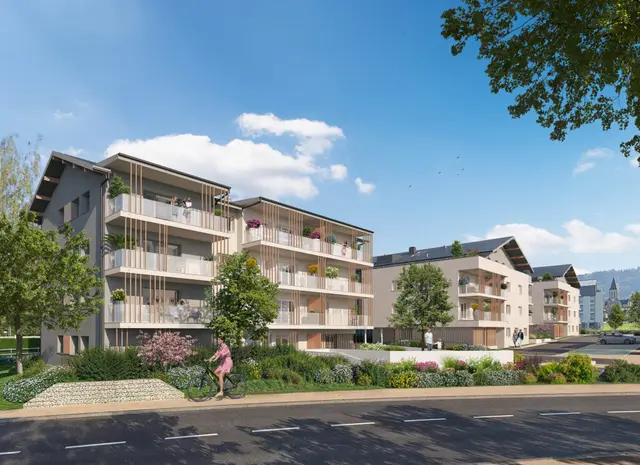
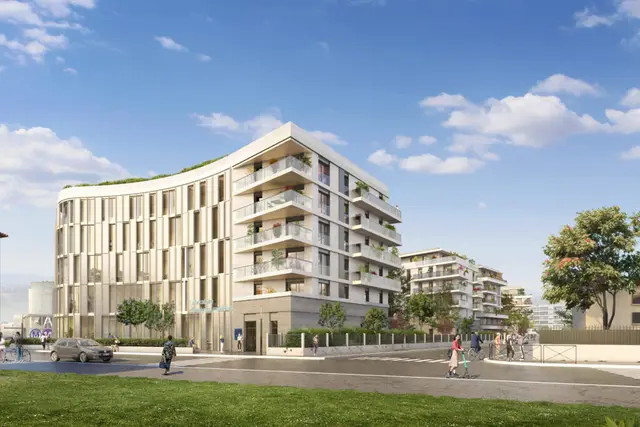
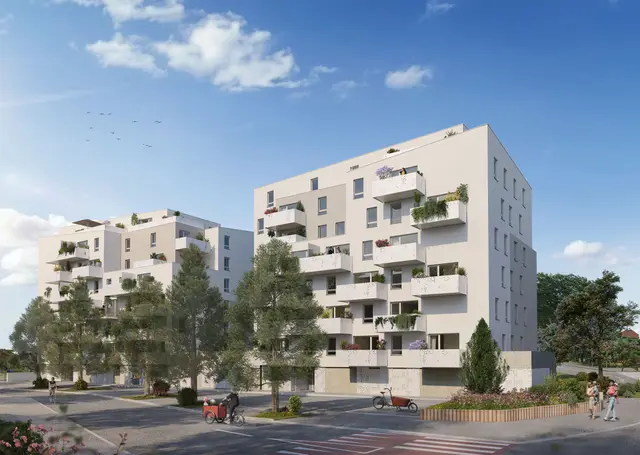
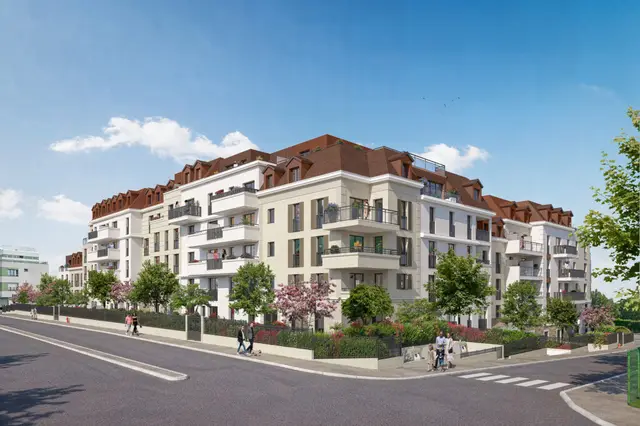
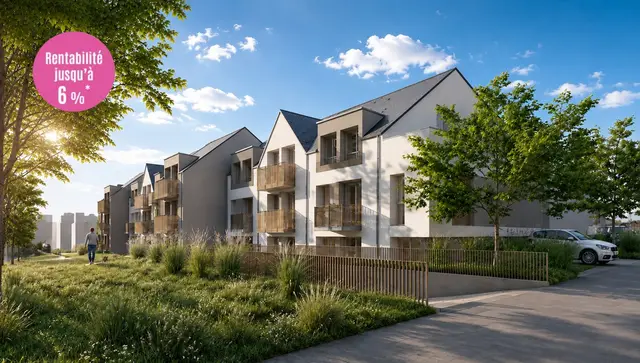 Residence image · non-contractual